
Thierry Lacaze Highlights the Importance of Global Collaboration at the World Orphan Drug Congress USA
RareKids-CAN Nominated Principal Investigator and MICYRN Scientific Director Dr. Thierry Lacaze recently joined international leaders in a rare disease research, regulation, and drug development at the World Orphan Drug Congress USA in Boston, one of the largest global conferences dedicated to advancing therapies and improving outcomes for people living with rare diseases.
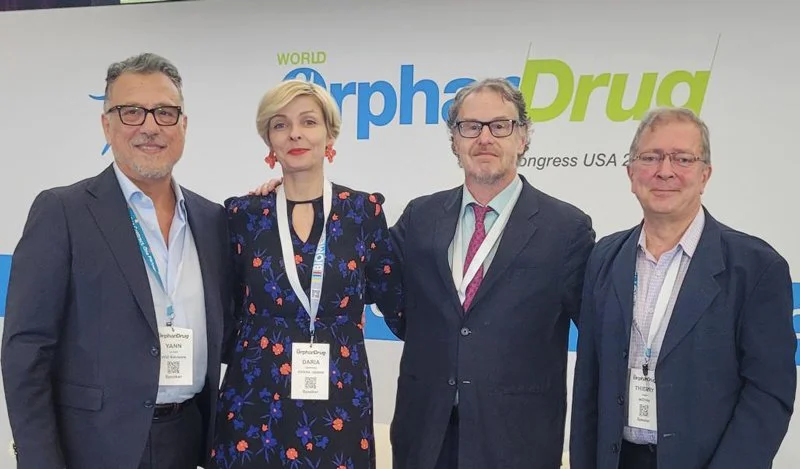
From Left to Right: Yann Le Cam, Keynote Moderator and Strategy Advisor, VOZ Advisors; Daria Julkowska, Keynote Speaker and Head of Strategy & Partnerships in Health, ERDERA-INSERM; P.J. Brooks, Keynote Speaker and Deputy Director of Rare Disease Innovation, Member of IRDiRC Funders Constituent Committee (FCC), NIH/NCATS; and Thierry Lacaze, Keynote Speaker and RareKids-CAN Nominated Principal Investigator, MICYRN
The event brings together pharmaceutical and biotechnology companies, regulators, patient organizations, researchers, and healthcare leaders from around the world to address the challenges and opportunities facing the rare disease community.
Dr. Lacaze participated in the keynote panel, Ready to Run: Building Clinical Research Networks for Rare Disease Trials, alongside representatives from the U.S. National Institutes of Health (NIH) and the European Rare Diseases Research Alliance (ERDERA). The discussion focused on the critical role that research networks play in accelerating trial readiness, improving collaboration across jurisdictions, and ensuring patients can access innovative therapies more efficiently.
As Nominated Principal Investigator of RareKids-CAN and Scientific Director of MICYRN, Dr. Lacaze used the session to highlight Canada’s growing expertise, infrastructure, and readiness to support pediatric rare disease research. The discussion underscored the opportunity to attract new investments, strengthen partnerships with biotechnology and industry leaders, and bring more rare disease clinical trials and therapies to children and families in Canada.
“Rare diseases require global solutions,” said Dr. Lacaze. “No single organization, institution, or country can address these challenges alone. By building strong clinical research networks and meaningful partnerships with industry, we can accelerate the development of therapies while ensuring children and families have greater opportunities to participate in high-quality research and access emerging treatments.”
Participation in international forums such as the World Orphan Drug Congress helps position RareKids-CAN as a key partner in the global rare disease ecosystem, creating opportunities for collaboration that support the network’s mission in advancing pediatric rare disease research and improving access to innovative therapies for children across Canada.