
Why Caregiver Voices Matter in Global Rare Disease Research
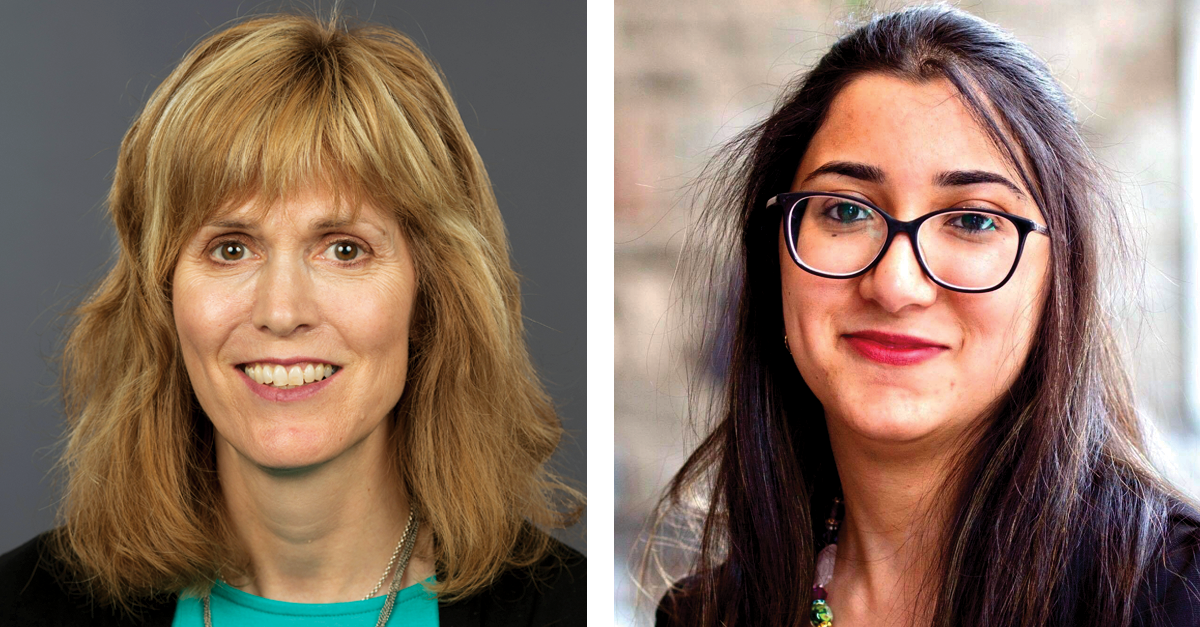
Genevieve Currie (left) and Leah Sarah Peer (right) have joined the Global Rare Disease Priority Setting Partnership Steering Commitee at the James Lind Alliance.
For families affected by rare diseases, the path to answers is seldom straightforward. Diagnosis can take years, treatments are often limited, and navigating healthcare systems can be overwhelming.
Genevieve Currie and Leah Sarah Peer, two RareKids-CAN family partners, have recently been asked to sit on the Global Rare Disease Priority Setting Partnerships (PSP) Steering Committee with the James Lind Alliance. The Committee is an international initiative designed to identify and prioritize patients, caregivers, and clinicians to guide future rare research funding.
Their participation ensures that the lived experiences of families affected by rare diseases are represented in a process that will shape global research priorities.
Bringing Lived Experiences to Global Research
Both Currie and Peer bring deeply personal connections to rare disease advocacy, alongside significant professional and community leadership.
Currie is a parent, registered nurse, researcher, and advocate focused on complex care needs, rarity, medical complexity, and disability. She sits on several national committees including acting as co-chair of the Children with Medical Complexity Network with Children’s Healthcare Canada and sitting on two RareKids-CAN sub-platforms. She also facilitates Family Engagement in Research and the Envisage-Service Provider program with CanChild Center for Disability Research.
As the parent of a child with a rare medically complex condition, Currie has dedicated much of her work to supporting families navigating similar journeys and ensuring they have a voice in the research and care decisions.
Peer brings both professional and personal perspectives to rare disease advocacy. She is the founder and executive director of the Peer Medical Foundation, a youth-led non-profit advancing health equity, inclusivity, diversity, and racial justice in medicine. She also hosts the Peer Med Podcast and works with the RareKids-CAN’s EDI+I Sub-platform. Peer’s professional work has been driven by, and is complementary to, her lived experience as a rare-sibling and caregiver to her sister who lives with Neurofibromatosis type 1 (NF1).
“As a rare-sibling and caregiver to my sister who lives with NF1, I’ve seen firsthand how rare disease research decisions made far from the patient’s bedside can shape the care, access, and outcomes that families experience every day,” Peer says.
Why Patient & Caregiver Voices Matter
The Global Rare Disease PSP Steering Committee’s will identify a global “Top 10” list of research priorities for rare diseases using the James Lind Alliance Priority Setting Partnership Process.
For Currie, participating in the initiative is a natural extension of her advocacy work supporting families caring for children with complex conditions.
“I liked the idea of a global committee to look at priorities for the rare disease community,” she says. “I have an 18-year-old son with a rare neurodevelopmental disorder and I have tried to get involved in as much as possible to provide more support for families along their caregiving journey.”
Both emphasized that families living with rare diseases bring perspectives that are often missing from research discussions.
“Caregivers and families bring the perspective of what daily life is like and the challenges and strengths of living and participating in a community with a rare disease.” — Genevieve Currie
“Caregivers and families bring the perspective of what daily life is like and the challenges and strengths of living and participating in a community with a rare disease,” Currie explains.
Peer agrees, noting that research priorities can sometimes overlook the real-world experiences families face.
“Researchers and clinicians see patients in clinical moments. Caregivers see everything in between: the late-night worries, the fights for referrals, the isolation, and the moments of resilience that never make it into a chart.”
Expanding Focus
One goal of the steering committee is to ensure that research priorities reflect not only the biological aspects of rare diseases, but also the broader realities of living with them. Currie believes this broader perspective is essential.
“The most urgent question, in my mind, is one that sounds simple but rarely gets asked first: What do patients and families actually need?” — Leah Sarah Peer
“In general, the scientific community often focuses on the physiology and pathophysiology of the rare disease but rarely the experience of families caring for a child living and trying to thrive in community,” she says. “It is urgent to pose research questions considering participation in daily life, wellbeing and quality of life for the child and family.”
Peer highlights the importance of asking the right questions from the start. “The most urgent question, in my mind, is one that sounds simple but rarely gets asked first: What do patients and families actually need?” she says.
Building a Rare Disease Research Roadmap
Rare disease research often takes place in fragmented pockets around the world, with communities working in isolation and funding spread thin. Identifying a global set of shared priorities could help bring greater coordination and focus to these efforts. Peer believes a globally recognized list of research priorities could help create momentum across the field.
“A global Top 10 could change that. It would give researchers, funders, clinicians, and patient communities a common set of priorities to rally around — not just within one country, but across borders.”
Currie also highlights the importance of global perspectives, particularly because access to care and research opportunities varies widely between regions.
“People from different parts of the world will bring their perspectives from challenges in their geographic locations and what we need to consider when we choose a priority with lack of access or lack of inclusion,” she says.
Looking Ahead
For both Currie and Peer, serving on the Global Rare Disease PSP Steering Committee is about helping ensure that families living with rare diseases have a stronger voice in shaping the future of research.
Together, their participation reflects a growing recognition that meaningful progress in rare disease research begins with listening to the people who live with these conditions every day.