
Reflections from EURORDIS Open Academy: Learning, Partnership, and the Future of Rare Disease Engagement
Investing in patient and family leadership is essential to advancing rare disease research, care, and treatment. Through RareKids-CAN's Patient and Family Engagement Sub-Platform, we are committed to creating opportunities for patient and family partners to build knowledge, strengthen their skills, and contribute meaningfully across the research ecosystem.
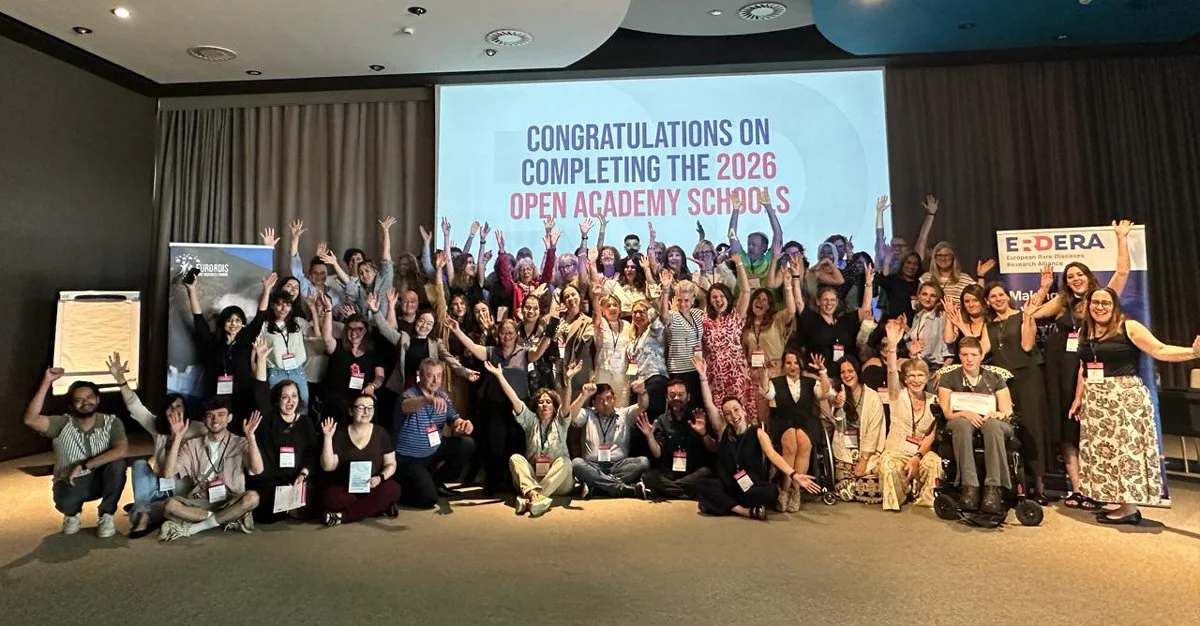
Participants of the 2026 EURODIS Open Academy.
Earlier this spring, RareKids-CAN supported Patient and Family Engagement Sub-Platform Lead Sara Pot's participation in the European Organisation for Rare Diseases (EURORDIS) Open Academy in Barcelona, Spain. The internationally recognized program brings together patient leaders and advocates from around the world to explore how patients and families can shape research, medicine development, regulatory decision-making, and health policy.
Below, Sara reflects on her experience, key learnings, and the opportunities she sees for strengthening patient and family engagement in Canada's rare disease landscape.
Sara Pot's Reflections from the EURORDIS Open Academy
This spring, I had the opportunity to travel to Barcelona to participate in the EURODIS Open Academy, a training program supported by the European Rare Diseases Research Alliance (ERDERA) designed to strengthen the role of patients and families in rare disease research, medicine development, and health policy. With gratitude to RareKids-CAN for making this possible, I joined patient leaders and advocates from across the globe to learn how patient partnerships are evolving within the rare disease landscape.
Throughout the week, discussions on clinical trial design, ethics committees, health technology assessment, and regulatory decision-making reinforced the importance of involving patients and families early and meaningfully. Whether determining which outcomes matter most, evaluating the risks and benefits of new therapies, or informing reimbursement decisions, lived experience adds essential context that cannot be captured by data alone.
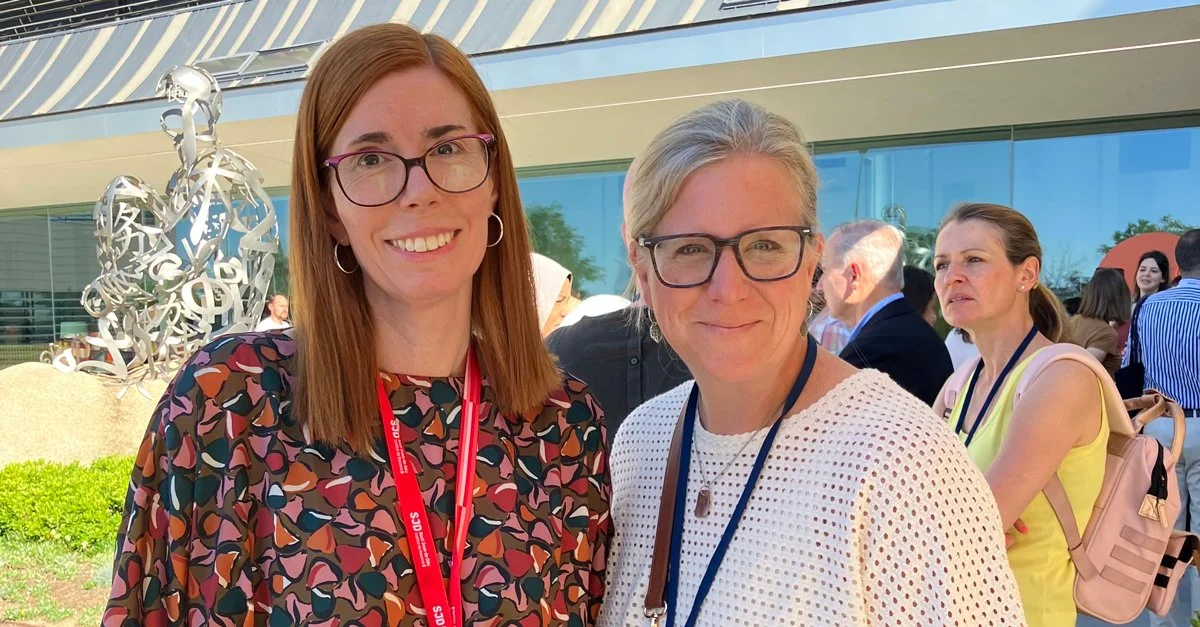
Sara Pot (right), with Begonya Nafria (left), Patient Engagement in Research Coordinator at Sant Joan de Déu.
A highlight for me was the opportunity to visit Sant Joan de Déu (SJD) Hospital in Barcelona and learn from Begonya Nafria, Patient Engagement in Research Coordinator, and the SJD team. We observed thoughtful integration of clinical care, research, and family-friendly spaces that demonstrated how healthcare environments can be designed around the needs of pediatric patients and their families. Equally impactful were the many conversations about patient journeys, care pathways, and the role of patient organizations in shaping healthcare systems.
While many sessions focused on European structures and processes, the training prompted reflection on the Canadian context. What opportunities exist for patients and families to contribute to medicine development and regulatory decision-making in Canada? How can we build the knowledge, skills, and pathways needed for meaningful participation?
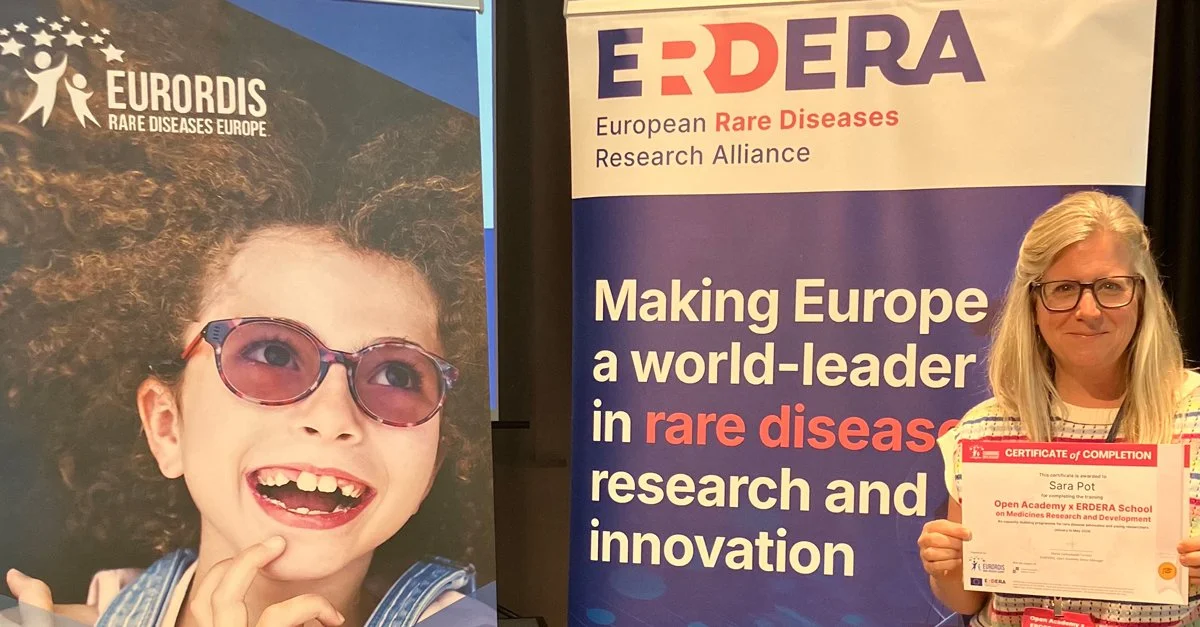
Sara Pot with her workshop certificate.
Perhaps the most valuable aspect of the experience was connecting with people who share a deep commitment to improving the lives of those affected by rare diseases. Their passion, expertise, and persistence were inspiring.
The week left me with a greater appreciation for the complexity of the system, a stronger understanding of where patient perspectives can make a difference, and a desire to continue learning how patients and families can help shape the future of rare disease research and care.