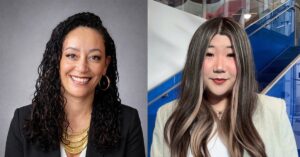
By The RareKids-CAN Indigeneity sub-platform team
Rare Disease Day reminds us that equitable care means recognizing the unique needs of Indigenous communities in Canada.
Many First Nations communities face a disproportionate demand for specialized rare disease care and early identification is essential for timely treatment and life planning. Founder genetic variants — where a mutation is present in a small ancestral population that became more common over generations — can affect multiple relatives, deepening the social and economic impacts on families.
RareKids-CAN’s Indigeneity sub-platform is dedicated to ensuring that the unique perspectives and realities of Indigenous peoples and communities are meaningfully represented and embedded across our initiatives. We are working to ensure that culturally informed considerations are integrated into clinical trial design, implementation, and execution so that Indigenous children and families have equitable opportunities to participate in pediatric rare disease clinical trials and access innovative treatments in Canada.
The sub-platform is guided by The Indigenous Community Guiding Circle (ICGC), a diverse group of Knowledge Holders. Michelle Paquette, the Indigeneity Sub-Platform lead coordinator, emphasized the importance of this collaboration, noting that “during on-going engagement, the Knowledge Holders have voiced their appreciation of the network’s openness to First Nation, Métis and Inuit voices as we work towards our common goal of more inclusive pediatric rare disease clinical trials.” She added that the team is hopeful the collaboration will lead to meaningful and positive changes for Indigenous people experiencing rare disease diagnosis.
General considerations:
-
Health‑care systems serving First Nation communities face disproportionate demand for specialized rare disease care
-
Early identification and monitoring of at‑risk individuals — including children — is crucial because late diagnosis delays symptom management and life planning
-
Due to specific genetic founder variants, there is a greater likelihood that multiple relatives are affected, amplifying social and economic effects on families
There are also conditions like Kennedy’s Disease/Spinobulbar Muscular Atrophy (SBMA), and Long QT Syndrome that occur in some First Nations communities at a disproportionate rate.
Kennedy’s Disease/ Spinal Bulbar Muscular Atrophy (SBMA)
SBMA, or Kennedy’s disease, is documented at the highest reported rate in the world among some Cree and Saulteaux populations. It is a genetic condition inherited on the X chromosome that affects men carrying the mutation and causes weakness of the muscles that control facial movements, speech and swallowing, and causes weakness of the hands and legs. Other health issues can occur with SBMA, such as diabetes and heart problems.
SBMA prevalence among Indigenous people in Saskatchewan is estimated at 14.7 per 100,000, the highest reported rate in the world, compared with 1–2 per 100,000 globally
Long QT Syndrome
Long QT Syndrome (LQTS) is a heart condition that can lead to abnormal heartbeat patterns that can cause dizziness, fainting, heart palpitations, and seizures. It can be passed on from generation to generation as a hereditary condition caused by a non-working gene and it occurs up to eight times more often in certain British Columbia First Nation communities.
LQTS affects approximately 1 in 250 people in the Gitxsan community compared to an estimated 1 in 2000 people in the general population
Early and ongoing management of LQTS is preventing potential acute care admissions and possible deaths, while helping a majority of the people with the disorder live long, healthy lives with minimal treatment.
Since 2015, 15 people, representing 13% of the community’s population, have been diagnosed with Long QT Syndrome
Both SBMA and LQTS highlight the importance of integrating culturally informed considerations into clinical trial design, implementation, and execution to ensure that families have equitable opportunities to participate in much needed pediatric rare disease clinical trials and have access to innovative treatments in Canada.
Some of the work the Indigeneity sub-platform is undertaking to address these needs includes collaborating with other sub-platforms in the RareKids-CAN network to provide guidance on best practices, ensuring that Indigenous ways of knowing and being are meaningfully incorporated into materials, resources, and activity development. We are also exploring strengthening partnership and shared learnings with other Indigenous peoples, including Māori, Pasifika, and First Nations in Australia, and leveraging Pewaseskwan’s existing relationships and partnerships with international Indigenous communities.
As RareKids-CAN continues to deepen our understanding of the unmet needs of Indigenous populations in the pediatric rare disease space, we will apply these insights to strengthen training initiatives such as IMPaCT, a platform dedicated to preparing PhD students, postdoctoral fellows, and early-career researchers to design, conduct, and effectively communicate clinical trials. In addition, we will offer guidance to non-Indigenous clinicians and researchers on culturally respectful engagement with Indigenous patients, their families, and extended kinship networks.
For more information, please reach out to Michelle Paquette.
* We have specifically used ‘First Nations’ because the examples used come from First Nation communities only and not Métis or Inuit communities. The two examples effect mostly Cree, Saulteaux, and Gitxsan First Nation groups.