
Canadian National Mirror Group Contributes to International Discussion on Rare Disease Registries
The Canadian National Mirror Group (NMG), led by RareKids-CAN, is helping ensure Canadian perspectives are represented in international efforts to strengthen rare disease research and data infrastructure.
Established through Canada’s participation in the European Rare Disease Research Alliance (ERDERA), the NMG brings together researchers, clinicians, patient organizations, policymakers, and other stakeholders to share knowledge, identify priorities, and foster collaboration across Canada’s rare disease community. A key area of focus is improving the use of registries to support research, patient engagement, and access to clinical trials.
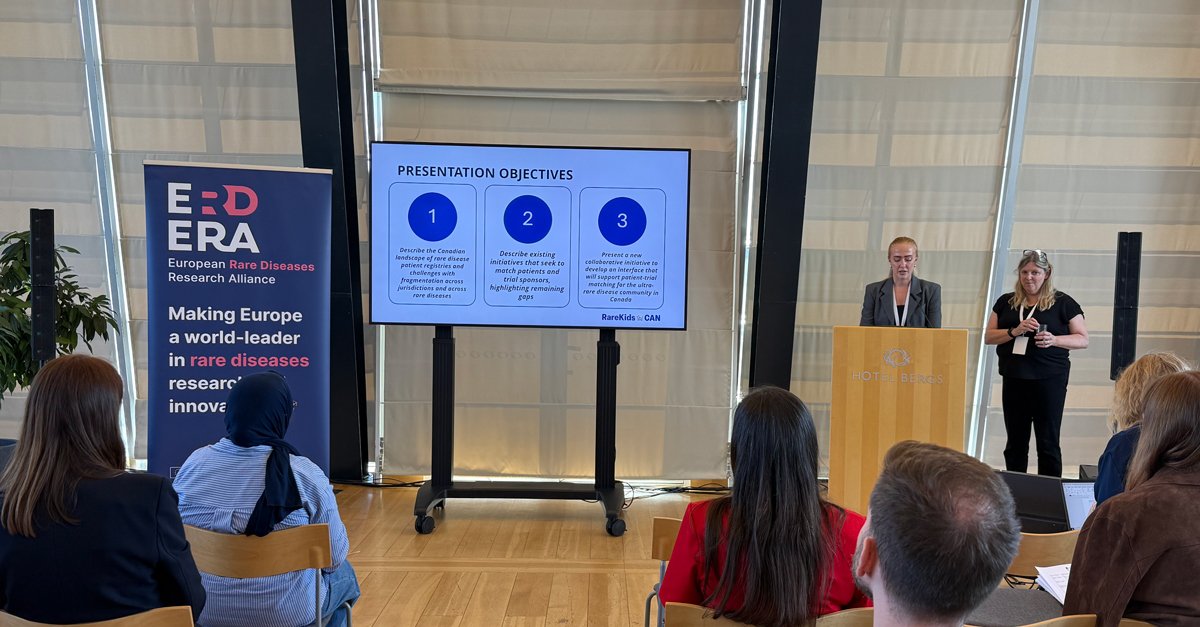
Catherine Strandt, RareKids-CAN Project Manager, presenting on the Canadian National Mirror Group.
As part of this work, Dr. Beth Potter, RareKids-CAN Registry sub-platform lead, and Dr. Catherine Strandt, RareKids-CAN Project Manager, attended the ERDERA WP23 Workshop, Creating, Evolving and Utilising National Registries to Advance Rare Disease Research, help in June 2026 in Riga, Latvia.
The workshop brought together rare disease registry leaders, researchers, and policymakers from across ERDERA member countries to share experiences, challenges, and best practices related to national rare disease registries.
Workshop discussions explored how registries can support patient identification, facilitate research participation, enable data sharing, and strengthen collaboration across jurisdictions.
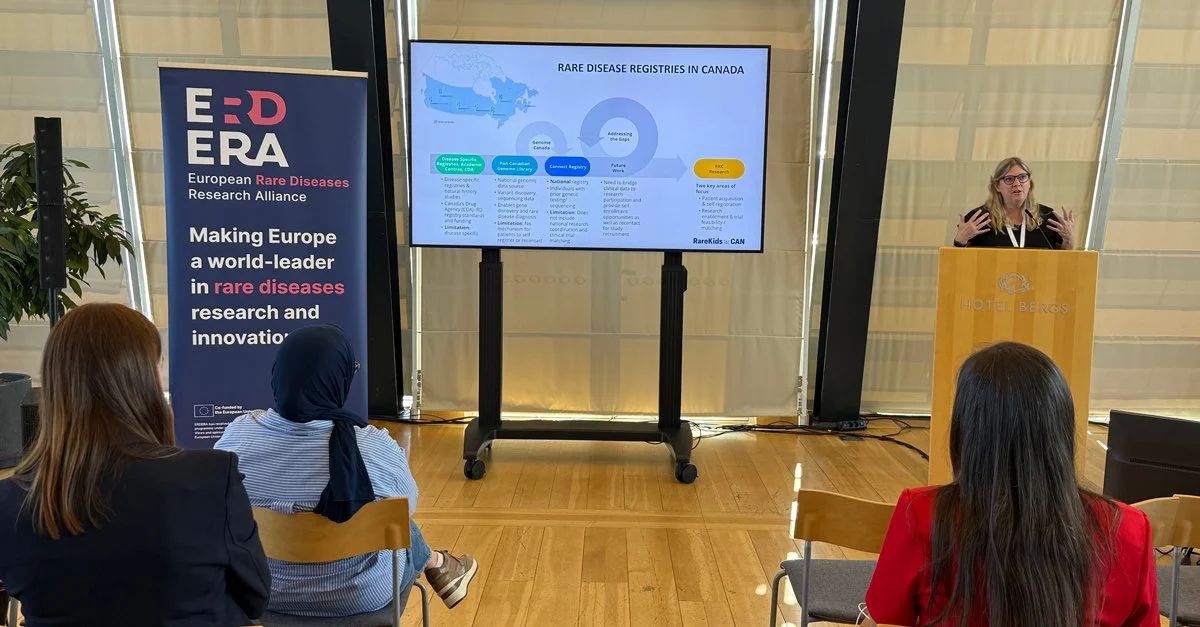
Beth Potter, RareKids-CAN Registry sub-platform lead presenting at ERDERA WP3.
On behalf of the Canadian NMG, Potter and Strandt presented Canada’s evolving rare disease registry landscape. “One of the key strengths of the Canadian NMG is its ability to bring diverse experts together around shared goals,” said Dr. Strandt. “By strengthening connections between registries, researchers, clinicians, and patient communities, we can create a more coordinated research ecosystem that improves opportunities for participation and helps advance rare disease research both in Canada and internationally.”
Participants also explored approaches to developing new national registries, enhancing existing infrastructure, improving interoperability and data standards, and aligning national efforts with broader European and international initiatives.
The workshop reinforced the important role registries play in advancing rare disease research and highlighted the need for coordinated patient-centred approaches to data collection, governance, and collaboration. Through its participation in ERDERA, RareKids-CAN continues to support opportunities for Canadian stakeholders to contribute to and benefit from global rare disease research initiatives.